
A Zesty Take
By Muriel Jacques & Sneha Sinha
Citrus is undeniably the best fruit and the best seasoning. Have you ever had a dull bowl of pasta, spritzed it with some lemon, and suddenly it’s sparkly and new? Today, we’re going to explain how that happens. And, more importantly, to make the case that the humble citrus deserves a permanent place in your kitchen.
If you’ve heard of Samin Nosrat’s Salt Fat Acid Heat, you already know that acid is one of the four essential elements of great cooking. But knowing that and using it wisely are two different things. Acids can be found throughout your kitchen: vinegars, fermented pickles, ketchups, mustards, and yes—citrus. These brighten the flavor of dishes by cutting through the richness of fats and lifting the compounds perceived as dull or flat. In short, citrus balances the flavors that are already there.
Think of biting into a ripe lemon right now, and we’ll bet your mouth is already watering. While this is a Pavlovian response to protect your tooth enamel, it literally wakes your brain up to pay attention to the food in front of you. This instinctual response is why bartenders, chefs, and aunties alike treat acid as a non-negotiable.
But citrus fruits are more than just their juice. Consider James Bond’s Vesper, where the ribbon of lemon peel is twisted over the cocktail. This stealthy touch is for the aroma, not the taste. Even Bond gets it: Citrus is a sneaky weapon.
Now, for a brief history lesson. Citrus fruits originated in South and Southeast Asia, then moved through the Middle East and the Mediterranean on the Silk Road. By the time European explorers sailed across the Atlantic, they packed citrus on their ships for survival. Scurvy, brought on by vitamin C deficiency, was a fatal disease curable only by oranges and lemons, which accelerated the spread of these fruits across the globe. Today, South Africa, Egypt, and China lead exports of this puckering category of fruit.
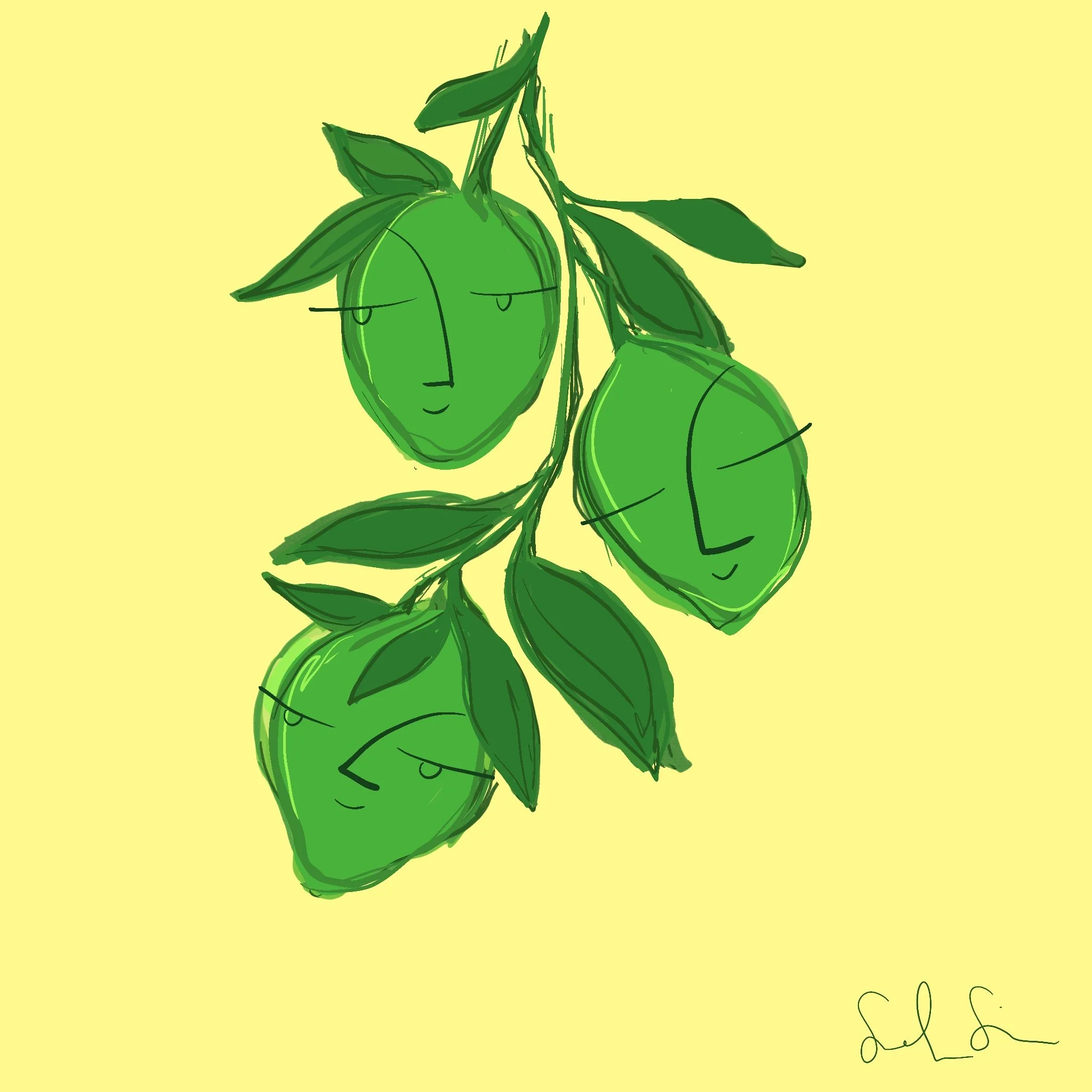
So, of all of the citrus in the world, which one is the best? This isn’t like choosing a favorite child for us. Instead, it’s an agreement we came to quickly. It’s the verdant, floral, effortless… lime. This is definitely a biased opinion: squeezed generously in Sneha’s mom’s salty-sour-sweet kachumber* and Mu’s grandma’s iconic blaff**, lime was ubiquitous in both of our upbringings, from Minnesota to Martinique.
In honor of this shared love, here are two of our favorite recipes incorporating limes.
Sneha’s Ginger-Garlic-Clilantro Chicken
Serves 2
Ingredients: 2 chicken breasts (or 4 thighs), 4 tbsp yogurt, 2 tbsp salt, 2 tbsp grated ginger, 2 tbsp grated garlic, ½ cup of finely chopped cilantro, 1 lime, 1 thai chili (optional).
Method:
In a plastic bag or large bowl, add the yogurt, salt, grated garlic and ginger, cilantro, and juice of one lime and stir to mix the marinade.
Add the chicken breasts, making sure to thoroughly massage the marinade (either with your hands or by shaking the plastic bag – though with your hands is better).
Place marinated chicken in the fridge, and let sit for up to 24 hours.
When ready to cook, lightly pat the marinated chicken dry with a paper towel to remove any excess juices. Cook on a cast iron (or any pan, or even grill) over medium-high heat.
Serve with rice or naan, some thinly-sliced raw onions, and… you guessed it, a generous squeeze of fresh lime juice.
Martinican First Communion Chocolate by Tatie Maryse (Yes, There's Lime in There) Serves 2–3
Ingredients: 550 ml semi-skimmed milk, 20 g gwo kako (raw cacao stick) grated, 30 g pure cocoa powder, 100 ml water, 120 g sweetened condensed milk, ½ tsp bitter almond extract, 1 tbsp toloman starch (or cornstarch), 1 spent vanilla pod, zest of ½ lime, 1 cinnamon stick, 30 g blanched almonds (optional)
Method
Over very low heat, warm the milk with the lime zest, cinnamon stick, vanilla pod, and a pinch of grated nutmeg. Do not let it boil. This infusion is the flavour foundation of the drink; the lime quietly perfumes the entire base. Infuse for 10–15 minutes.
Grate the gwo kako into a bowl, add the cocoa powder, and dissolve with the pre-heated water.
Pour the chocolate mixture into the infused milk and stir. Cook gently for 10 minutes.
(Optional) Crush the almonds, wrap in a clean cloth, and suspend in the hot chocolate to steep.
Stir in the condensed milk, then add the bitter almond extract. Cook on low for 20 minutes.
Ten minutes before the end, dissolve the toloman in a little cold water and slowly whisk it in to thicken. The chocolate should be lightly creamy; add it gradually.
Continue cooking on low, stirring occasionally, for a further 10 minutes.
Strain and serve hot, traditionally alongside pain au beurre, a Martinican brioche
We hope this inspires you to add a spritz of lime to your next meal, whether it’s sweet or savory. And no, none of that sh*t in a squeeze bottle.
*An Indian chopped salad made from diced cucumbers, tomatoes, and onions, seasoned with lime juice, cilantro, chili peppers.
**A classic Martinican Creole fish dish where the fish is marinated in lime juice, garlic, and hot peppers, then poached in a fragrant spiced broth.