
Cornell, Columbia, and The Echo of an Essay
By Eva Fillieres Benaim
CW: The following article includes mentions of sexual assault and strong language.
Forgetting my textbook, skipping class, turning my homework in late. These were the transgressions my middle school teachers considered worthy of punishment in the form of essay-writing. At Cornell, apparently, so is gang rape.
In a lawsuit filed under the name Jane Doe, a former Cornell student accuses seven Chi Phi fraternity members of assaulting her over several hours, after they pressured her into taking drugs—including ketamine and marijuana—and consuming additional alcohol. She alleges that the university allowed some of them to avoid further punishment by writing essays.
Cornell insists this was not their only consequence, but the image has stuck. Protesters in Ithaca carried signs reading “We Want Sentences, Not Essays” and “It’s SA, not Essay.” As women and students across the country have taken to social media to share their own stories of sexual assault on campus, the question follows us downstate: Is this only Cornell’s story?
The Chi Phi fraternity’s group chat of 57 members contains some of the case’s most damning words.
“Free pussy upstairs”
“Like you can walk in and whip it out.”
“Shop still open?” “Yeah.”

The messages were read twice: First by dozens of fraternity brothers that night, and later by Cornell itself. None of those reading, it seems, felt compelled to protect Jane Doe.
When she reported the assault to campus police the following month—along with a six-page sworn statement—the district attorney declined to prosecute, and the university handled the matter internally. Of the seven men, Cornell expelled two, while others received lesser punishments or none at all.
After nearly two years and an unsuccessful attempt at pressing criminal charges, Jane Doe filed a civil lawsuit against Cornell and the fraternity. The Cornell Daily Sun broke the news two days later, and the case became a national story.
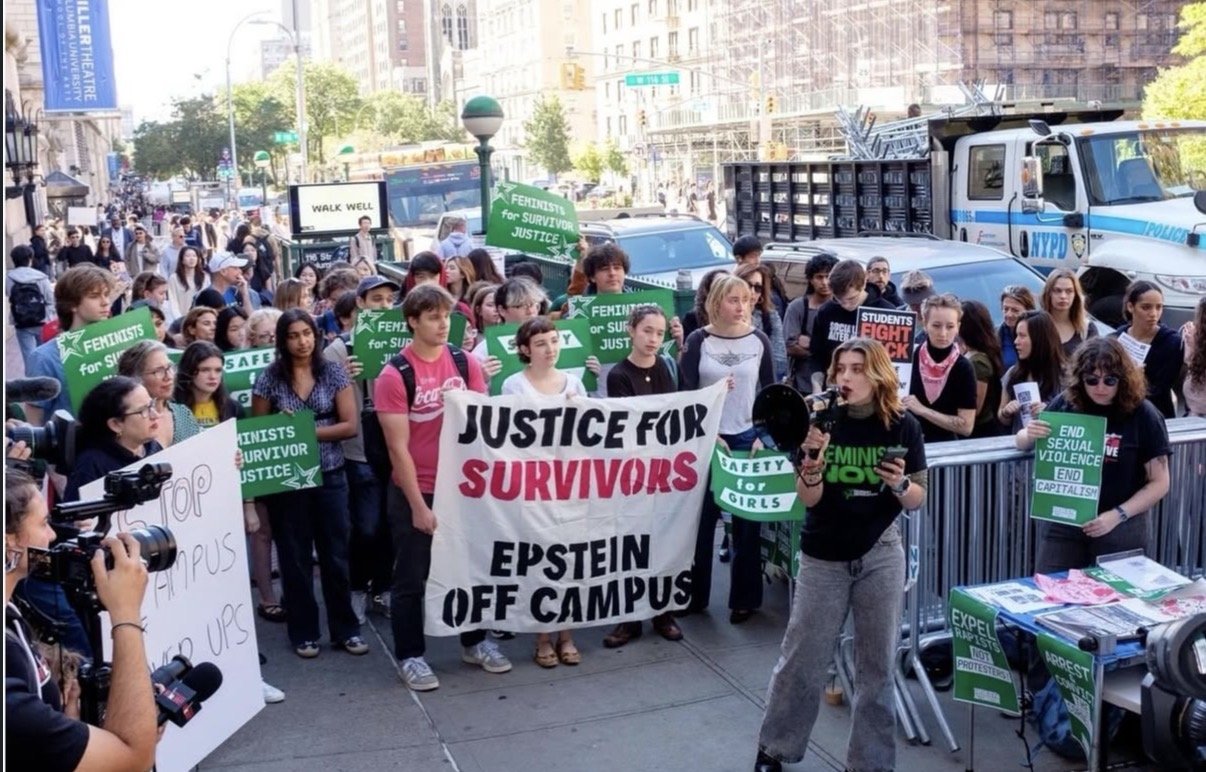
On October 3, 2026, Cornell President Michael Kotlikoff acknowledged in an eight-minute video that the university “must do better.” This half-hearted apology did little to quell Cornell students’ anger, which has rapidly spread across the country. Here at Columbia, students have organized similar protests, and women’s groups have echoed messages of solidarity, but Columbia’s administration hasn’t said a word. Nor has any other Ivy League.
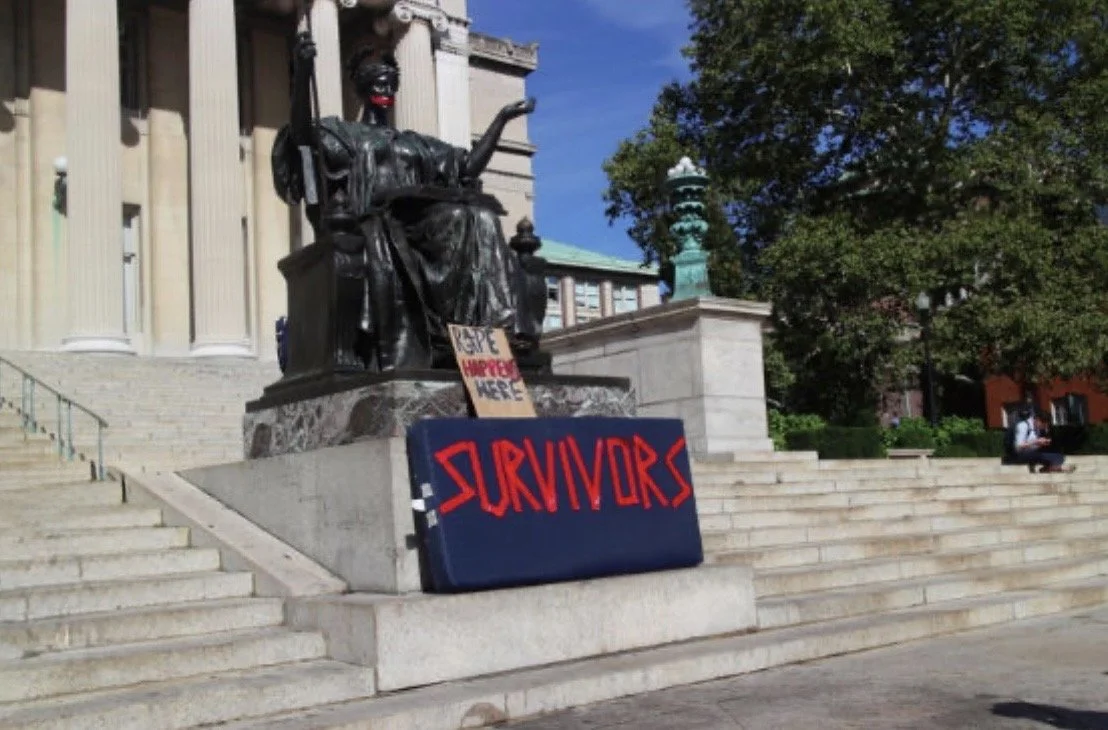
Cornell’s failure is not an anomaly: Similar institutional deficiencies mark Columbia’s own history. In 2014, a student on our campus spent months carrying a dorm mattress between classes—the same kind she alleges she was raped on—in protest of how the university handled her complaint. She planned to carry the mattress until Columbia expelled her rapist. Instead, she carried it across the graduation stage.
Cases like these have long been dismissed as “he said, she said.” For Cornell’s Jane Doe, the words were not only said: they were written down, timestamped, and sent to a fraternity group chat.
What the men in that chat and our own university’s administration share is the apparent belief that silence absolves them of responsibility. Universities often say that their hands are tied: Cornell has declined to provide specifics on its disciplinary response—citing student privacy rules—and Columbia refused to comment on the mattress case in 2014.
But this silence is a choice, one that betrays the kind of institution a university wishes to be. It means something when dozens of men read a message inviting them to collectively rape a woman and fail to protect her. And it means something when our academic institutions reflect this failure.
Perhaps the men in that chat told themselves it was not their room, not their name, not their problem. Columbia, it seems, has reached the same conclusion: Not its campus, not its name, not its problem. But when it comes to violence against women, there is no such thing as someone else’s problem.
Just as every woman is impacted by Jane Doe’s experience, every university shares something of Cornell’s failure.