
The United States, 250 Years In: An End or a New Beginning?
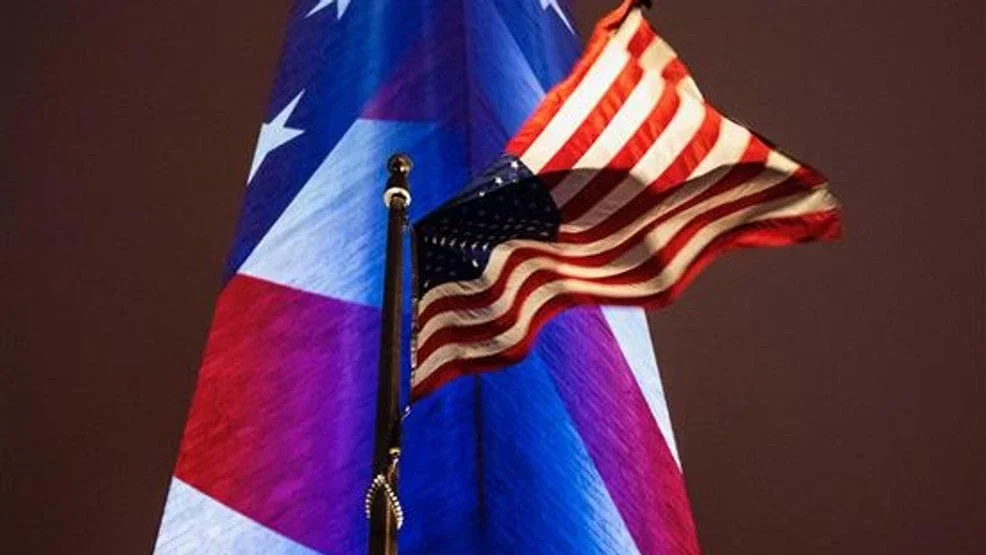
Image Credit: KFDM News
By Rory Callison
As a student of history and public policy, I find this year especially significant. The year 2026 marks the 250th anniversary of the Declaration of Independence and the founding of the United States. This milestone forces us to ask what values this country champions, and whether it lives up to those ideals. From the perspective of a U.S. citizen, we remain far from a “perfect union.” 250 years in, we face a profound sense of crisis and a historic distrust of public institutions.
President Donald Trump prepares to celebrate this anniversary with a July 4 Ultimate Fighting Championship held on White House grounds. Meanwhile, he is renovating the residence of the last 44 presidents—the so-called “People’s House”—with gilded frames and ornate antiques in a manner that breaks from longstanding norms. While changes to household decor pale in comparison to many of the challenges facing the country today, the White House’s subversion of tradition symbolizes something greater. It is easy to drift into cynicism as once-sacred democratic norms and institutional guardrails fall into disarray. What once seemed unthinkable now feels routine in American politics, both at home and abroad.
As of February 11, the United Nations—an organization that the United States helped found after World War II—faces financial collapse as Washington withholds its dues. Meanwhile, U.S. threats toward Greenland and continued tariffs strain transatlantic alliances. In Venezuela, American territorial ambitions jeopardize the very rules-based order the U.S. once promoted. We no longer even invoke “democracy” or “human rights” as justification. A world order inspired by values found in the Declaration of Independence is seemingly collapsing before our very eyes.
I cannot say these values are doing better domestically. At home, federal agents have killed the very citizens they swore to protect, including Renee Good, Keith Porter, and Alex Pretti. Immigration officers now routinely defy judges’ orders. Leaders have normalized the January 6 insurrection and pardoned those involved. Newly proposed legislation threatens the integrity of elections by tightening voter ID laws nationwide, potentially disenfranchising millions. In the upcoming midterm elections, the administration even seeks to nationalize elections and potentially deploy Immigration and Customs Enforcement (ICE) to watch polling sites, as proposed by former White House strategist Steve Bannon. Combined with growing polarization, these actions accelerate democratic decline and erode any shared sense of truth.
As a historian, I find this trend fills me with melancholy. Yes, the U.S. has never fully realized its promise of universal rights; it has often reserved liberty for a select few. Still, over two and a half centuries, Americans have slowly expanded these ideals to include historically excluded communities. My concern does not stem from a utopian sense of American exceptionalism, but from the fear that our hard-earned progress is in crisis.
But despite all the gloom, history also reminds us that social and political upheaval can catalyze reform. The Civil War ended slavery. World War I preceded women’s suffrage. Through reforms such as job programs, expanded welfare, and Social Security, the New Deal countered the vast economic disparities of the Great Depression. The civil rightst Movement gained momentum after World War II. Globally, the United Nations and the Universal Declaration of Human Rights emerged from catastrophe. Progress is a never-ending battle.
As I prepare to leave SIPA in the coming months, I worry about the world I am entering. The ideals I cherish—and the progress Americans have fought to secure—are in danger. But as we continue on, I have a not-so-simple request for those who believe in democracy and the power of government to do good: Keep the faith. Whether you work in government, business, or civil society, stay critical, speak truth to power, protect the vulnerable, act with compassion, and resist cynicism.
We are undoubtedly living through a crisis. But a crisis also creates opportunity. At SIPA, we often dissect current events and attempt to predict their consequences. We ask ourselves, “What comes next?” Well, I have a different question for you as we cross this semi-quincentennial anniversary: What do we want to come next?