
Who Am I To Photograph?
By Sheridan Smith
“Much of the time, we see our faces being taken without consent, belonging, or knowledge. That’s why the inside perspective is so important to us; it humanizes us.”
“Muitas das vezes vemos nossos rostos sendo levados por aí sem consentimento, pertencimento e conhecimento. Por isso é tão importante para nós a visão de dentro, nos humaniza.”
—Salém, photographer from Rocinha, Brazil
Brazil is trending right now. You may have noticed the marketing campaigns, the celebrities wearing Neymar jerseys, and baile funk TikToks. As a New York City-based photojournalist interested in ethics, tourism, and culture, I went to see what the hype was really about. Then, my time in Brazil taught me to do something I never thought I’d do: put my camera down.
During the two months I spent in Rio de Janeiro’s favelas—informal settlements built into the city’s hills and sometimes translated as “slums”—the tourism culture immediately struck me as undeniably extractive.
Visitors eager for virality came for the drone trend, centering themselves as the camera zoomed out over Rocinha—the largest favela in Brazil. I met David Dobrick while he was promoting Call of Duty’s Favela Map at Visão, a community bar and futebol pitch in Vidigal. His team filmed him juggling with a local, and rented the roof to film separately. They paid after Visão requested it, and promised to promote the business, but never followed up. Other influencers posted content romanticizing digital nomadism, used clickbait captions propagating stereotypes, or documenting the sewage, moto taxis, crowded homes, and other markers of poverty.
What about this made it feel so off? These instances were emblematic of a troubling trend in which outsiders enter communities in order to leave with cultural, social, or professional capital while flattening the locals into content.
I am not exempt from these dynamics. I’ve always wrestled with my role as an American photojournalist reporting on global realities, from Morocco, to Ireland, to Peru. It’s a morally confusing occupation. But witnessing tourism in Rio’s favelas held up an even clearer mirror.
I believe deeply in the camera as an apparatus for social change. At its best, photography can shed light on injustice, inform the public, and shift policy. Even when I photograph high-profile events like New York Fashion Week, I am able to use my camera to show the spectacle of wealth through a lens of satire, as a means of redistributing power. In the favelas, as an outsider, however, new ethical questions arose. There, my camera didn’t feel helpful or subversive; it felt disruptive.
In the favelas, social justice wasn’t about how I used my camera—it was about whether I used it at all.
Don’t get me wrong: I’m not saying tourism cannot be mutually beneficial. Many of my local friends in Rocinha who became tour guides told me how the recent tourism boom helped support the favelas’ economies and deconstructed stereotypes. But they also told me how foreign visitors can create security threats, disrupt local life, act offensively, post, and leave without a second glance.
In the digital age, everyone is a photographer. So, it’s especially important to note exactly where tourism and photography become a problem: Not in the act of moving, but in the imbalance of impact. The difference between ethical and unethical photography often comes down to who is telling the story, and who benefits from it.
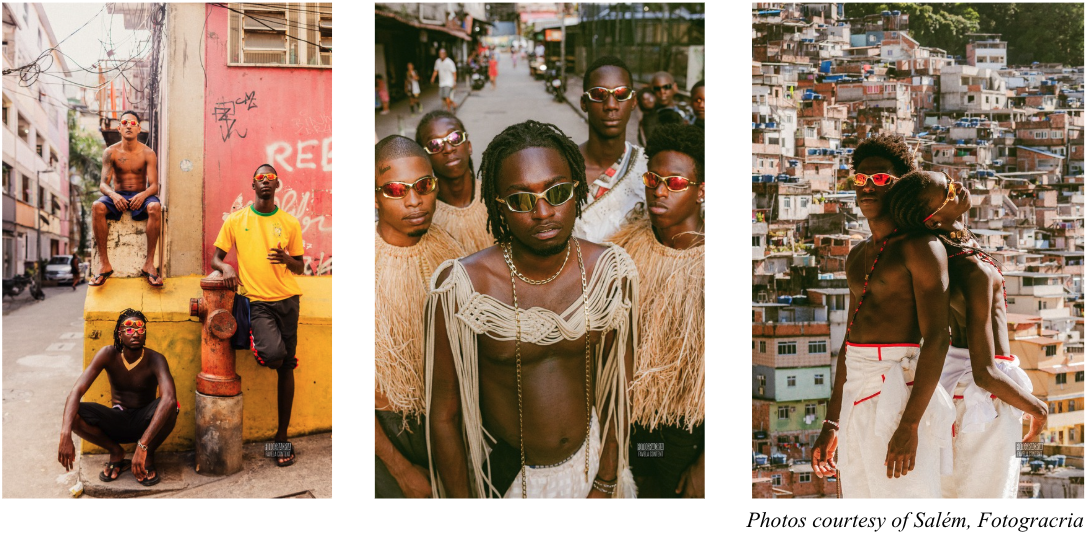
I knew if I was going to share anything from the favela, it would center local voices. For this reason, I asked Salém, a photographer from Rochina who refers to her work as “self-portraits of the favela,” if I could share her photos.
There was only one place where I picked my camera up: Visão Vidigal. I went every Sunday for a weekly churrasco cookout party and futebol tournament called Joga Favela. The community began to see me less like a visitor and more like a regular. I gave my portraits to those I photographed, and offered my photos to Visão’s bar, which the owners used to advertise on Instagram. If I hadn’t spent as much time there, maybe I wouldn’t have taken any photos at all.
I don’t have an answer on how to tell global stories as an outsider. I’m not trying to solve it, I am only carrying it. More of us should—because if we let that tension push us into silence, it protects the very systems we endeavor to change.
So, what’s the answer to ethical photography and ethical tourism? It isn’t to stop shooting, and it isn’t to stop moving. The answer, as I see it, is to remain in question. Because visual ethics is not a puzzle to solve; it's a pursuit and a promise.
Whether you’re a photojournalist or you simply own a camera, ask yourself: What is the impact I can have here? Sometimes, that impact comes from taking a photo. Other times, it comes from realizing that while you are not essential, your access is. You hold the power to open a door, or pass the mic to someone already telling their own story.
Brazil taught me to consider putting my camera down, and I encourage you to do the same.