
A Colder Winter Doesn’t Mean Global Warming is a Hoax
Photo/PBS
By Andrea M. Falche Dominicci
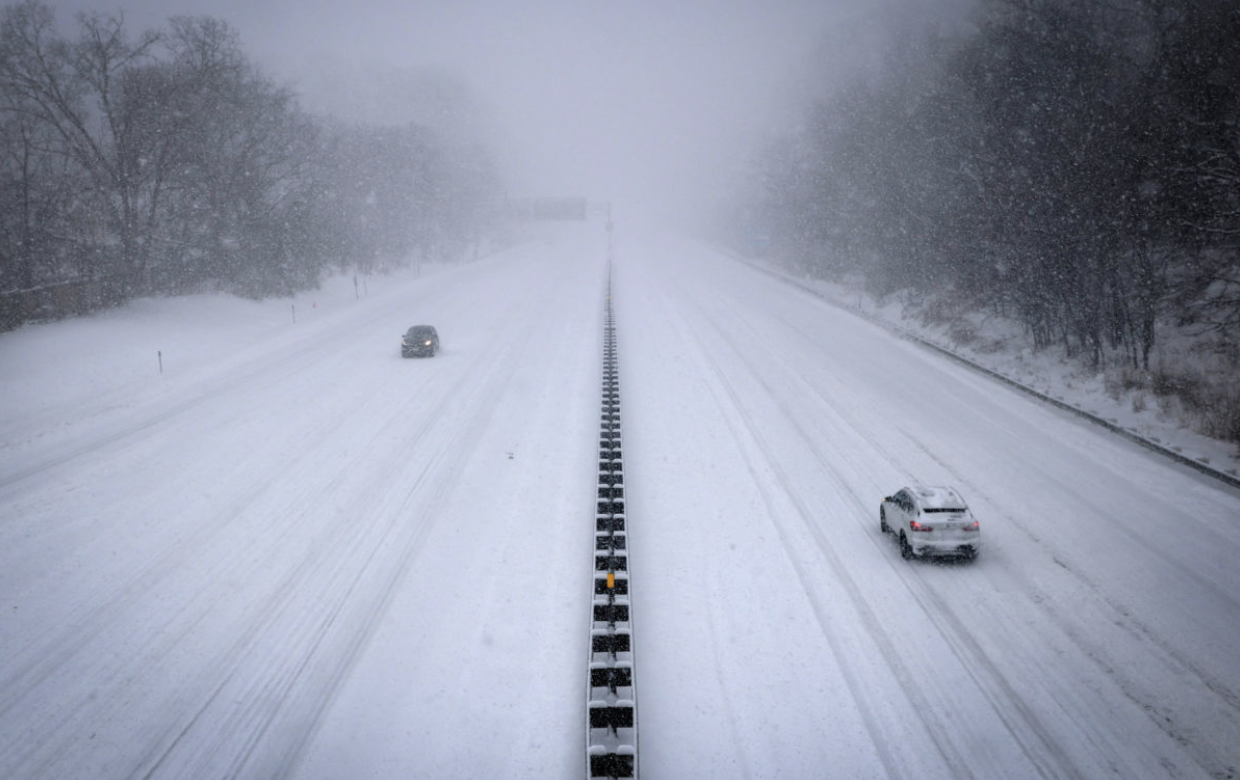
As Americans shiver from bursts of Arctic cold and subzero temperatures, social media is flooded with posts that mock the reality of global warming. It’s an easy conclusion to jump to; after all, if the planet is warming, why is it so stunningly cold outside?
The claim that a cold snap undermines the existence of global warming stems from a key misunderstanding of weather versus climate. Weather describes short-term conditions like a cold spell, a snowstorm, or a week of below-average temperatures. In contrast, climate tracks long-term trends in temperature and precipitation, measured over decades. Weather is what you have to wear today; climate is what you will have to expect for a lifetime. Focusing on a few frigid weeks misses the bigger picture of decades of rising temperatures around the world.
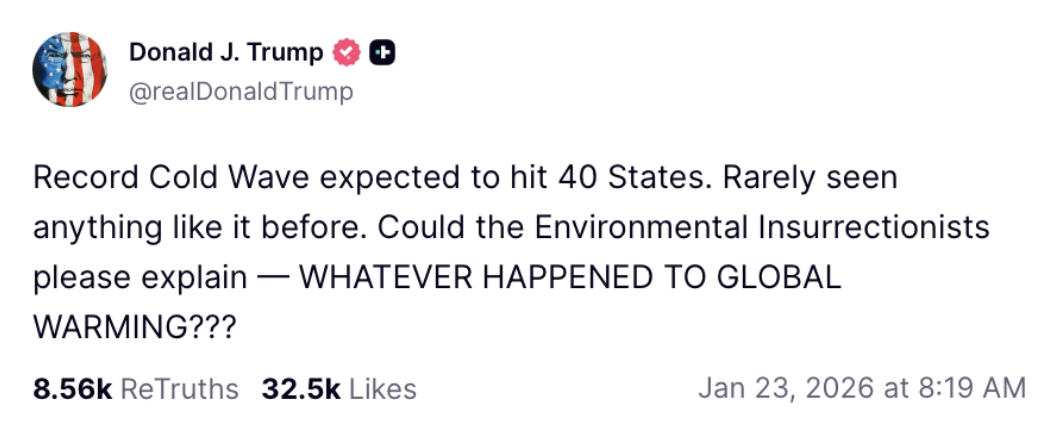
The current federal administration continues to express skepticism about climate change, even as scientific evidence in favor of it grows stronger. Recent federal actions reflect this stance, including the revocation of the 2009 endangerment finding that underpins key emissions regulations. Following what amounts to one of the most aggressive rollbacks of environmental regulations to date, the second Trump administration has cited recent extreme cold events to cast doubt on the reality of global warming. In January 2026, President Trump posted on Truth Social: “Record cold wave expected to hit 40 states… Could the environmental insurrectionists please explain — WHATEVER HAPPENED TO GLOBAL WARMING???”
High-profile statements like this do more than make headlines; they influence public perception of climate science, despite decades of established research. Data from Yale University’s Program on Climate Change Communication found that roughly one in eight Americans believe that global warming is not happening at all, while three in ten think it is driven mostly by natural changes rather than human activity.
X/Donald J. Trump
Earth’s climate is a complex system. It is not a thermometer that simply goes straight from cold to hot. It is dynamic, driven by the interaction between the atmosphere, oceans, ice, and land. Because these components are interconnected, a shift in one region can reshape weather patterns elsewhere. As a result, extreme cold in one area can occur even as the planet continues to warm.
Few places make this interconnectedness clearer than the Arctic. The region is warming nearly four times faster than the rest of the globe in a process called Arctic amplification. Normally, sea ice reflects sunlight back into space, helping cool the planet. But as the ice melts, it exposes the dark ocean beneath. As a result, this water absorbs up to 90 percent of incoming solar radiation, trapping more heat and accelerating warming. The heat disrupts the polar jet stream, a high-altitude air current shaped by temperature differences between the Arctic and lower latitudes that keeps cold air contained near the poles. When these temperature patterns weaken, the jet stream slows and becomes unstable, allowing Arctic air to spill southward. The result can be prolonged weather systems, cold snaps, and winter storms like those experienced across the U.S. in recent months.
While these cold snaps feel immediate, they do not reflect the planet's overall climate trajectory. Globally, temperatures continue to rise: the past decade has been the warmest on record, with average temperatures exceeding 1 degree Celsius above pre-industrial levels. This warming is fueling more frequent and long-lasting heat waves, accelerating glacial melt, and driving sea level rise. These long-term trends make clear that climate change is not a hypothesis: It is unfolding now and reshaping our world. Dismissing it because of short-term weather events puts many at risk.
The destabilization of the Earth’s climate system goes far beyond colder winters. Global warming is producing both unusually cold events and rising temperatures, with profound consequences for communities, economies, and ecosystems. The United Nations’ Intergovernmental Panel on Climate Change warns that sea levels are rising, posing serious threats to coastal cities, communities and small island nations. Even New York City, one of the major coastal cities on the East Coast, has projected rising sea levels, heavier rainfall, and more frequent flooding in the coming decades. These events are no longer distant possibilities; they are present risks affecting real people.
Rolling back environmental protections does not slow climate change; it shifts its effects onto the most vulnerable communities. Although everyone is affected by climate change, its impacts are not evenly distributed. Low-income families, coastal residents, and communities of color often bear the brunt of extreme weather. Flooding, heat waves, and food insecurity disproportionately impact those with fewer resources. Meanwhile, the costs of rebuilding and recovery strain local budgets more than federal resources. Reversing climate policies every four years amplifies these risks , leaving future generations to shoulder damages that could have been prevented.
Understanding climate change is not just a task for scientists and politicians; it concerns everyone. Preparing communities for extreme weather events and understanding how climate policies address these risks are crucial to protecting public safety and well-being. Extreme weather events are warning signs, not contradictions. Acting now is how we safeguard ourselves and our communities for the future.