
Tokio Blues
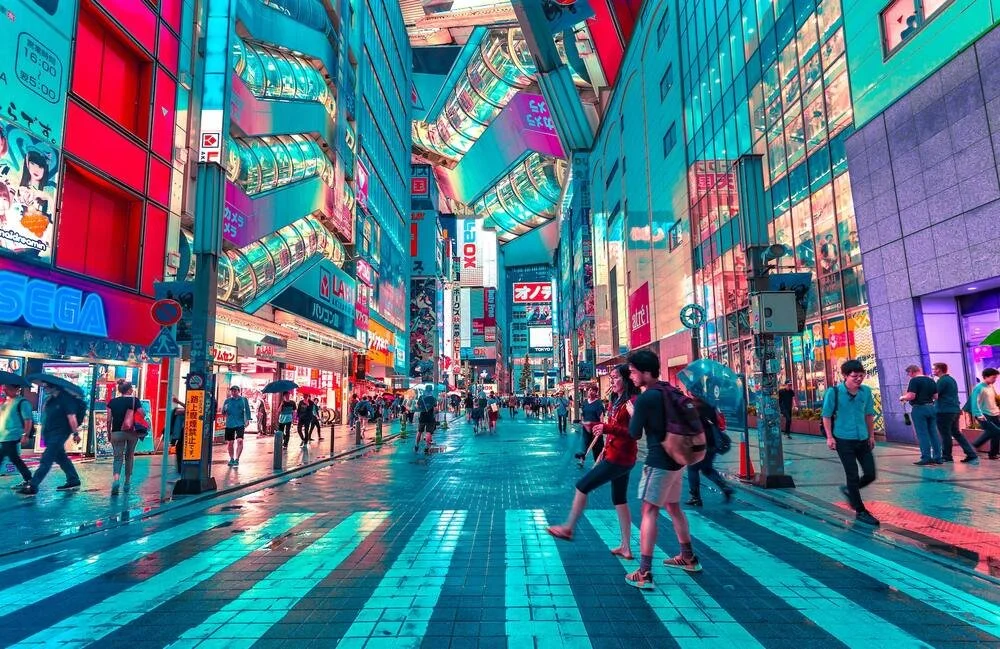
Image Credit: Arigato Travel
By Wilson Forero Jr.
The original version of this piece is in Spanish. For the English translation, please scroll down.
Aterrizar en Tokio sin haber dormido fue entrar directamente en un territorio extraño. La ciudad no se impuso ni se dejó recorrer. No hubo mayor estruendo, sino unos pálpitos cuidadosos del sonido. Filas que avanzaban en silencio, anuncios apenas audibles, cuerpos moviéndose con una precisión suave, como si compartieran un mismo tempo.
La recomendación de nuestros anfitriones del trek fue clara: la única manera de combatir el jet lag era habitar de inmediato el nuevo huso horario. Eso significaba que, aunque el cuerpo lo pidiera, el sueño debía esperar. Afortunadamente, los latinos tenemos una forma probada de matar el tiempo: la fiesta.
Fieles a ese impulso, salimos a buscar el lugar ideal para desbordarnos. Tatsuru, uno de los líderes del viaje, nos insistió que debíamos escuchar el jazz japonés.
Bastaron un par de minutos para ponernos a buscar en Google Maps: The Music Bar. Un bar de vinilos en la mítica Shibuya, ese cruce imposible donde confluyen millones de historias al mismo tiempo. Lo habíamos encontrado.
Nos cambiamos, disimulamos las ojeras, tomamos los primeros sakes en el bar del hotel y salimos con prisa, como si Tokio pudiera escaparse si no llegábamos a tiempo. Éramos diez latinos bullosos, dispuestos a dejarnos llevar por la música. No había vuelta atrás.
Sin embargo, al cruzar la puerta del bar, algo no encajó del todo. No hubo golpe de sonido ni bienvenida calurosa. Nadie levantó la voz. Nadie brindaba. Sonaba Almost Blue de Chet Baker, y en un susurro la mesera nos daba la bienvenida con algo de recelo.
El sitio era una caja de fósforos: diez mesas, pisos de madera, un mueble con más de mil vinilos y un largo bar vintage decorado con los más finos whiskies nipones. La mesera nos sentenció que nos separáramos en dos grupos. "You are too many," nos dijo. "Six and four, come this way."
Pero el bar estaba vacío. “Era fácil que nos acomodara a todos juntos”, pensé. Sin embargo, la señora confabuló para evitar a toda costa que rompiéramos el equilibrio ya alcanzado.
Almost you
Almost me
Almost blue
Al lado nuestro se encontraba una pareja. Él tomaba un Suntory a las rocas. Ella, un vino tinto oscuro pero ligero. Bebían en silencio.
Pasaron los minutos. La canción estaba a punto de terminar. Chet daba el último soplo a su trompeta. Era el clímax de su obra magistral. Mi instinto pedía un aplauso, aunque fuera mínimo, aunque fuera simbólico.
Nunca llegó.
Miré de inmediato a la pareja. Permanecían inalterados. No comentaron sus impresiones, no se besaron, no pronunciaron ninguna promesa rota. No porque faltara intimidad, sino porque lo único que habitaba era una complicidad silenciosa: la de no romper la calma que nos envolvía.
__________
El silencio es algo que, como latino, siempre me ha costado leer. A veces lo siento como un hueco, lo asocio a una conversación interrumpida. Sin embargo, aquí, a miles de kilómetros de Medellín, la ausencia de ruido parecía otra cosa.
Nadie parecía apurado por llenarlo. Nadie lo trataba como una falta. El silencio no pide ser corregido. Se dejaba estar.
Tatsuru me comentó que en japonés existe una palabra para designar esa idea: ma. Se traduce con torpeza como "intervalo", "pausa" o "espacio", pero en realidad nombra aquello que ocurre entre las cosas. El silencio entre dos notas, el vacío entre dos columnas. Más que una ausencia, es su estructura. No es lo que falta, sino lo que permite que algo exista.
Ese principio atraviesa la estética japonesa con una naturalidad casi invisible: en la arquitectura, en la ceremonia del té, en el metro, en los bares de vinilos de Shibuya. El ma no está concebido para llenarse, sino para respetarse. Se habita sin ansiedad. Interrumpirlo sería una forma de violencia.
En esa caja de fósforos de Tokio, la trompeta de Baker parecía moverse con plena conciencia de ese principio: entrar, salir, dejar algo abierto.
__________
Salimos del bar para encontrarnos de nuevo con el caos de Shibuya. Nos abrigamos y tomamos rápidamente el metro rumbo a nuestro hotel.
En el vagón, alguien comenzó a decir algo sobre la noche, pero la frase se disolvió a mitad de camino. Nadie la completó. Afuera, las luces pasaban: insistentes, indiferentes, demasiado brillantes.
El tren avanzaba en su propio silencio, incluso más profundo que el del bar. No era el mutismo de Chet Baker ni el de la pareja callada. Era el sonido de diez latinos que habían dejado de hablar porque ya no quedaba nada urgente por decir.
Almost Blue (English translation)
Landing in Tokyo with zero sleep felt like entering some parallel dimension. The city didn't announce itself or demand to be seen. No roar of traffic; just careful little pulses of sound. Lines inching forward without a word, announcements you could barely hear, people moving with soft precision, like they were all keeping time to the same song.
Our trek hosts had one rule: If you want to beat jet lag, you force yourself onto local time from the second you land. This meant that even though my body was screaming for sleep, crashing wasn't an option. Luckily, we Latinos have a tried-and-true way of killing time: We party.
So naturally, we went looking for the perfect spot to blow off steam. Tatsuru, one of the trip leaders, insisted we had to experience Japanese jazz.
After a quick Google Maps search, we found it: The Music Bar. A vinyl bar in Shibuya, the iconic intersection where a million stories cross paths every second. Perfect.
We threw on fresh clothes, tried to hide the dark circles under our eyes, knocked back our first sake at the hotel bar, and rushed out like Tokyo might vanish if we didn't get there fast enough. Ten rowdy Latinos, ready to lose ourselves in the music. No looking back.
But the moment we stepped through the door, something felt off. No wall of sound, no warm greeting. Nobody raising glasses or voices. Chet Baker's "Almost Blue" drifted off through the room, and the waitress whispered a welcome that felt more like a warning.
The place was a matchbox: maybe ten tables, wood floors, a wall stacked with what had to be a thousand records, and a gorgeous vintage bar lined with the best Japanese whiskies. Before we could even sit down, the waitress split us into two groups. “Too many people,” she said. “Six here, four there. This way.”
The bar was completely empty. She could've easily sat us together, I thought. But she was determined not to let us mess up whatever delicate balance she'd worked so hard to create.
Almost you
Almost me
Almost blue
A couple sat at the table next to us. He had a Suntory on the rocks. She had red wine; dark, but subtle. They didn't say a word.
Minutes went by. The song was winding down. Chet breathed one last note, the climax of the whole piece. My every instinct prepared to clap, even just a little, even symbolically.
But applause never came.
I glanced over at the couple. They hadn't moved. They didn't lean in to share what they thought, or kiss; they didn't say anything at all. Not because they weren't close, but because what they shared was a quiet agreement in the room: Don't break the spell.
__________
Silence is something I've never quite figured out. Growing up Latino, I always felt like it meant something was wrong, like someone stopped talking mid-sentence. But here, halfway around the world from my home in Medellín, the quiet felt different.
Nobody rushed to fill it. Nobody treated it like a problem. The silence simply existed.
Tatsuru explained that Japanese have a word for this: ma. People usually translate it as "interval,” "pause," or "space," but that doesn't really capture it. Ma is what happens between things. The silence between two notes. The gap between two columns. It's not about what's missing; it's about what that emptiness makes possible.
This idea runs through everything in Japan: architecture, tea ceremonies, subway rides, vinyl bars in Shibuya. Ma isn't something you're supposed to fill. You respect it. You live in it without feeling anxious. Interrupting it would almost feel violent.
In that matchbox in Tokyo, Baker's trumpet seemed to understand this completely. It would come in and pull back, knowing how to leave space for something unsaid.
____________
We finally left the bar and stepped back into the chaos of Shibuya. We grabbed our coats and caught the subway back to the hotel.
On the train, someone started to say something about the night, but the thought trailed off halfway. Nobody picked it up. Outside the windows, lights kept flashing past—insistent, impersonal, way too bright.
The train rolled through its own kind of silence, even deeper than what we'd felt in the bar. It wasn't Chet Baker's, or the couple's. It was ten Latinos who'd run out of things to say because nothing felt urgent anymore.