
Stepping Forward on Thin Ice
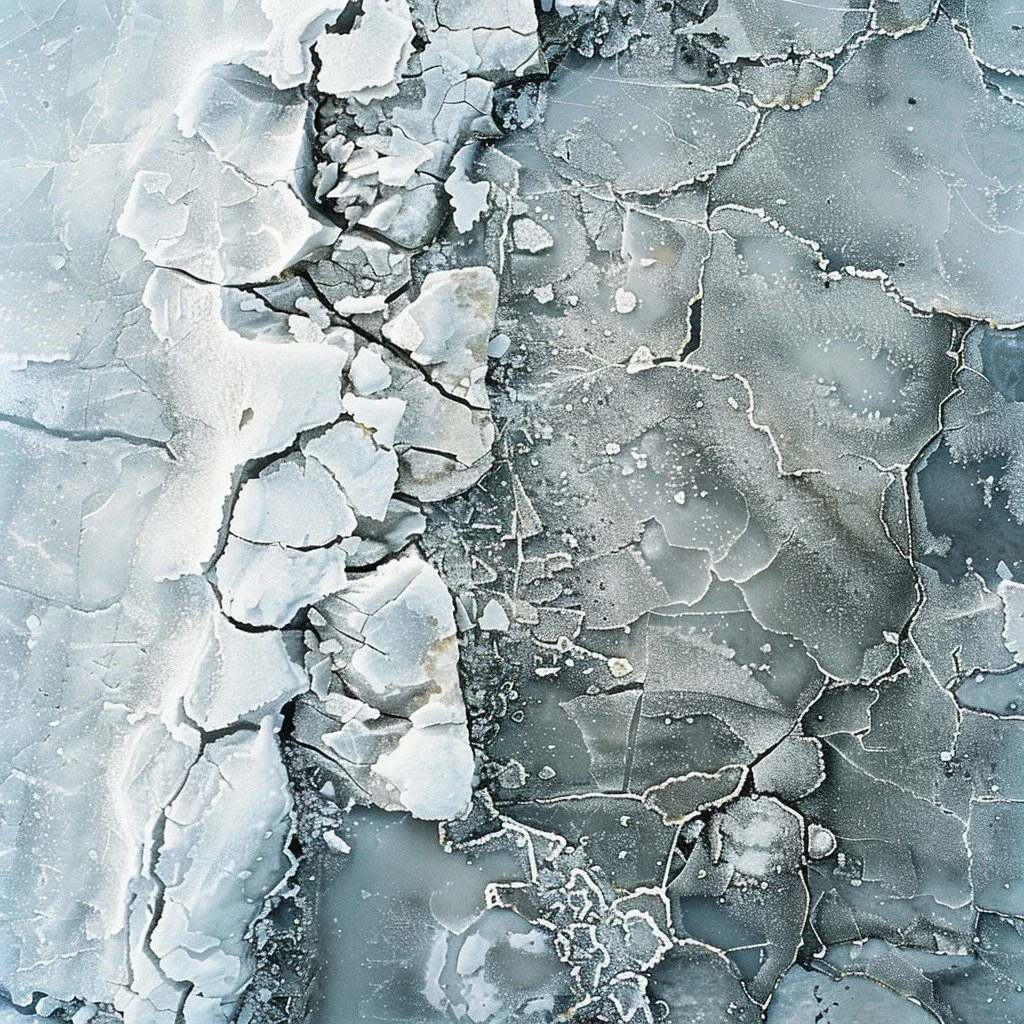
Image Credit: StockCake
By Emily Grip
Growing up, I sought solace in ice skating. During the winter, I would often bring my skates to the pond by my house. The pond, frozen over from the storm, left me never certain if I would find the ice sturdy enough to skate, or if it would crack beneath me.
Fear pulled my focus from the task at hand to the worst-case scenario: falling into the freezing water where the threat of hypothermia awaited. I had to separate instinct from imagination. The risk was real. The uncertainty was real. Yet, I followed through on my quiet commitment to myself to honor my curiosity and trust that with risk comes reward. This was the only way to discover what came next.
Thin ice forces you to pay attention. It changes how you move. You become more aware, more careful, more intentional. You learn balance and grounding, not because it is comfortable, but because it is necessary.
When I entered SIPA two years ago, I imagined a linear path: graduate school as preparation for a career within the U.S. government. I wasn’t naïve enough to expect stability. Part of the draw of studying international affairs was precisely its unpredictability—the constant evolution of power, norms, and alliances.
What I did not anticipate, however, was how quickly that uncertainty would stop feeling theoretical.
Our first year unfolded amid war in Europe, escalating polarization at home, and mounting scrutiny of the very institutions we were studying. In one seminar on the United Nations, a classmate asked, only half-jokingly, “Are we preparing for careers in institutions that might not exist in their current form by the time we graduate?” That question lingered longer than the lecture itself.
It would have been easier to let that silence harden into paralysis. But in these moments of doubt, I began to notice something else: the quiet courage of my peers.
We are living in an era of instability—politically, socially, environmentally. Every day seems to bring a new headline that makes the path before us feel less certain. It’s easy to feel frozen in place. Yet at SIPA, I see something steady beneath the fragility.
After class, conversations spill into the hallways and linger long past dismissal. People continue to debate the war in Ukraine, question whether accepting funding from the Bezos Earth Fund aligns with impact goals, and dissect Mark Carney’s speech at Davos. Peers organize discussions on sovereignty in a shifting world order and convene panels on issues many would rather sidestep. Engagement here does not retreat in the face of instability; it deepens.
In my “History of Future Policymakers” class, we were taught to question historical analogies and to resist using the past as a guarantee of the future. As we examined moments when leaders misread history or assumed trends would continue indefinitely, I began to see the present differently. Stability, like thick ice, is often something we take for granted. The lesson was not that institutions inevitably collapse, but that their endurance depends on choices made in moments of uncertainty. A friend who recently accepted a role in public service, despite ongoing hiring freezes, told me, “If institutions feel fragile, that’s exactly when they need people who still believe in them.” It would be easier to wait for “thicker ice.” But no one here is waiting.
So perhaps learning to “walk on thin ice” means adopting uncertainty as a teacher, not a threat. Uncertainty encourages us to rethink how we perceive risk and fragility, and to notice the instinct within us that continues to show up even when nothing is guaranteed. And that awareness and collective willingness to step forward make me hopeful for the future we are not just inheriting, but shaping.