
This Spring Cleaning Season, Repair
By Anupriya Aggarwal
In what turned out to be a futile effort, I asked many friends and acquaintances: “Do you have any broken objects at home?”. Ultimately, I resorted to a “Buy Nothing” group on Facebook: “Looking for a broken lamp. Promise to return it fixed (hopefully) or in its original condition.”
Finally, a woman named Deborah offered up a beloved lamp with an undiagnosed issue. It would work for a moment before flickering out. At last, something that needed fixing! I picked up the beautiful curvilinear wooden object from her house and brought it along to Columbia University’s Makerspace for a Right to Repair workshop.
The workshop was part of my “Ethics of Media, Technology, and Design” course taught by Professor Laura S. Scherling. That week, we set out to understand digital equity through policy tools like the Right to Repair. Our facilitator was Adam Dowis, an artist who creates handmade lamps and clocks from salvaged materials. Over two hours, we dug into a plethora of items—hair dryers, toys, toasters—that had been recovered from Big Reuse, a thrift warehouse in Bushwick. We tried our hand at fixing everything from Hot Wheels to charging cables and film cameras.
The first step to fixing anything is to check whether it works. Next, you figure out what’s causing it to not function. This exercise can often feel elusive: Sometimes, the culprit behind a broken object can be a tiny piece that requires identification and know-how to fix. That’s why the repair movement exists—to transfer power and ownership back to users.
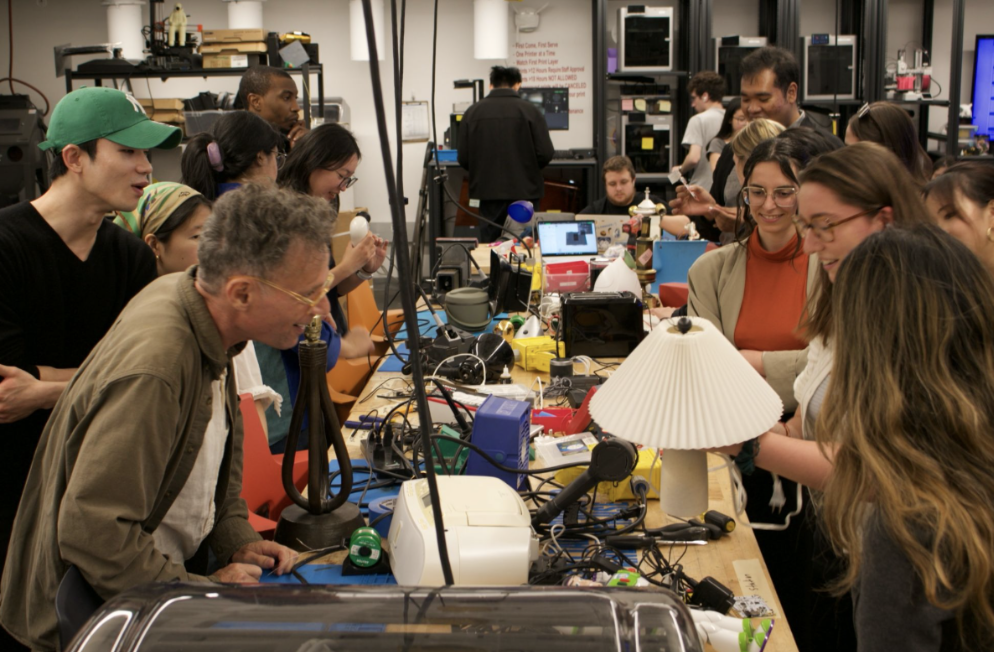
The Right to Repair workshop at Columbia’s Makerspace (Photo/Josefina Piddo)
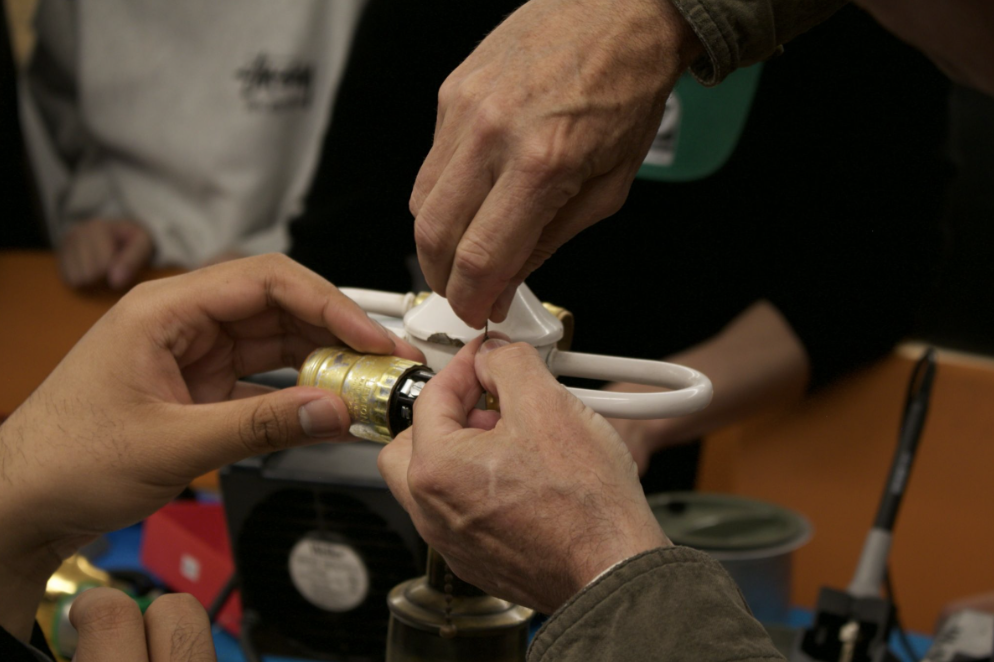
Adam demonstrating the process of fixing a lamp (Photo/Josefina Piddo)
Finding Deborah, an increasingly rare breed of human who’s not quick to throw broken things away, reminded me of my own family back in India.
Back home, we don’t get rid of things easily. Drawers are full of cables, USB drives, camcorders, and all sorts of old gadgets waiting for the day someone has the time to fix them. Every few months, a neighborhood electrician visits to fix our lamps and switches. My family’s infamous electric tandoor, which cooks off every time we use it, is still going strong after more than 15 years.
Without fail, every local market houses three people: a mochi (cobbler), a ghadi saaz (watch mechanic), and a Master Ji (tailor). I grew up making trips to Nehru Place—one of Asia’s largest electronics markets flooded with dealerships and repair shops—with our digital cameras, laptops, and printers to get them fixed. Not too far from there, pheriwalis (clothes recyclers) upcycle second-hand clothes and sell them at weekly markets across the city.
Thanks to this informal web of skilled and masterful fixers, my dad uses the same watch he got on his wedding day 32 years ago, and I’m even able to wear some of my mom’s clothes from when she was my age. India’s repair culture and its large informal economy built on repair and reuse defines daily life.
But today’s avid consumerism is shifting these dynamics—even in India. With rising disposable income and manipulative e-commerce strategies, young Indians are buying more impulsively than ever. Similar to their counterparts across the world, 72% of India’s Gen Zs turn to influencers for shopping inspiration. Meanwhile, companies worldwide make replacement more affordable than repair by using software that makes third-party repairs impossible, from iPhones to tractors.
At the Makerspace workshop, we put a name to what makes these practices so disorienting: “fragmentation”—the practice of having parts from different places, which makes products increasingly difficult to understand without traceability and harder to reclaim as your own.
Laws like New York’s Right to Repair legislation attempt to counter fragmentation by asking manufacturers to make diagnostic and repair documentation, tools, and parts available to owners and independent repair shops. Fundamentally, it renegotiates the relationship between manufacturers and the repair ecosystem that corporations have spent decades trying to dismantle. “Buy Nothing” groups, citizen-led advocacy, and even AI repair assistants further tackle directly the pressure of consumerism.
There is beauty and community in longevity and revival. When I returned the lamp to Deborah, cleaned and fit with a new switch, she was thrilled. She later sent me a photo of the lamp standing bright and tall on her bedside table, with an accompanying text: “Thanks again! The light has been on for over 24 hours—and it stays on!”
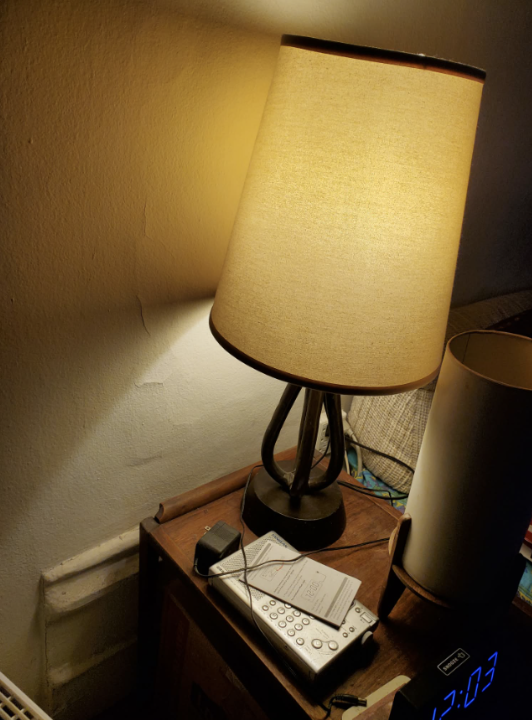
Deborah's lamp shining bright on her nightstand
This spring-cleaning season, think twice before abandoning that broken thing. Maybe it can be brought alive with just a bit of resistance, patience, and repair.